Rainbow Smelt fishing
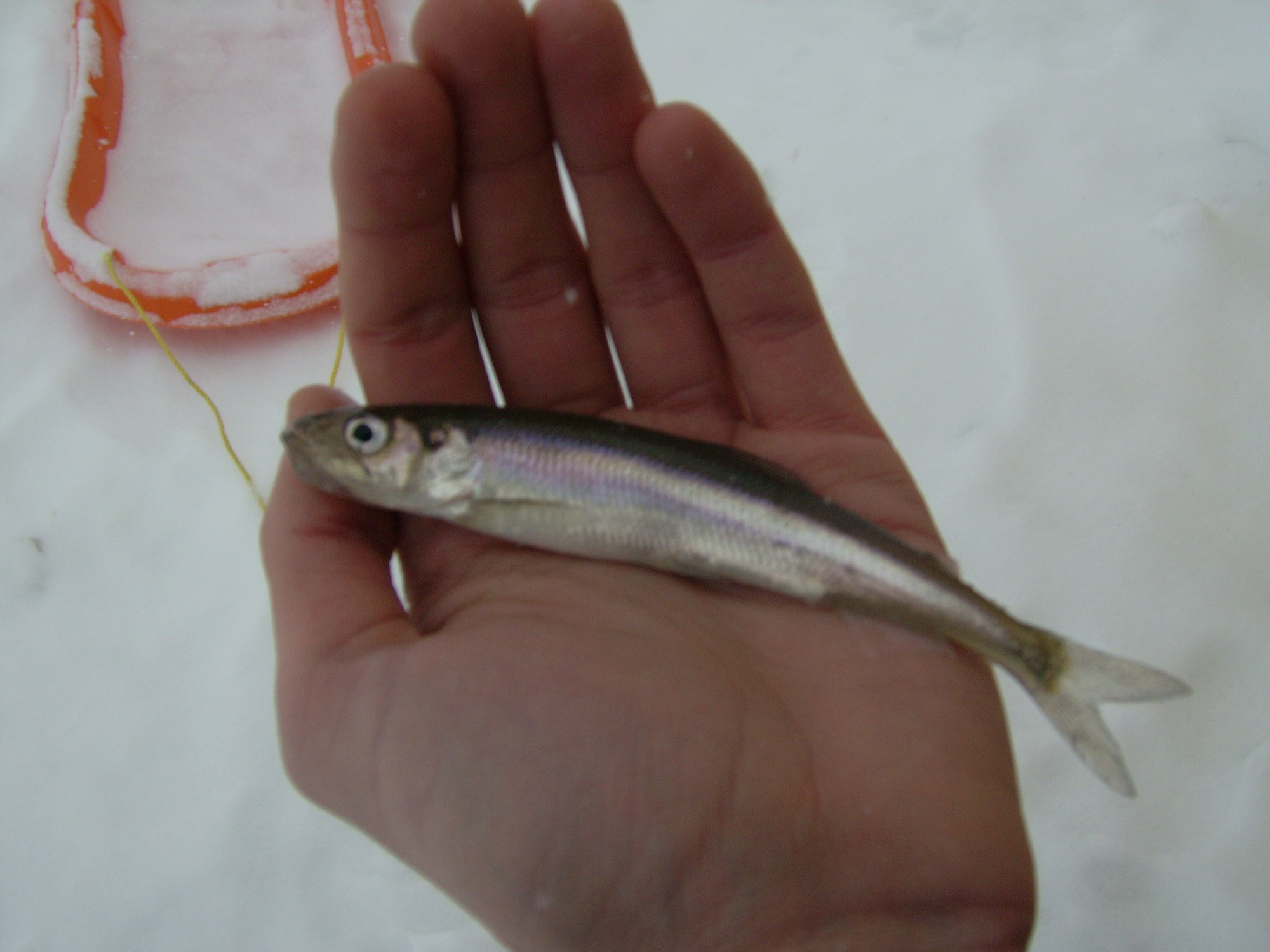
Osmerus mordax. Slender, cylindrical body with a small adipose fin between the dorsal and tail fins, the mark of a true smelt.
Rainbow Smelt fishing uses a tiny ice jig or a maggot with a light spinning rod for open water, at night. Rainbow smelt appears in no state's current stocking data this project tracks; it is wild and self-sustaining wherever found.
Published by Fishypedia · Sources last checked September 23, 2026
Drafted by AI from the cited sources and checked before publishing.
- Active times
- Night
- Line
- –
- Hook sizes
- –
- Stocked in
- 0 states
Identification
- Slender, cylindrical body with a small adipose fin between the dorsal and tail fins, the mark of a true smelt.
- Rows of canine-like teeth on the jaw and tongue set it apart from the lake chub and creek chub it's most often confused with.
- An eye that looks disproportionately large for its head.
- Silvery body with iridescent purple, blue, and pink sides fading to white on the belly, and a deeply forked tail.
- Most adults run 7 to 9 inches and rarely top 10 to 13 inches.
Sources: wildlife.nh.gov, accessed September 23, 2026 , maine.gov, accessed September 23, 2026 , adfg.alaska.gov, accessed September 23, 2026
Top lures
Sources: vtfishandwildlife.com, accessed September 23, 2026 , dec.ny.gov, accessed September 23, 2026
Top baits
A small minnow or minnow piece tipped on a jigging spoon or small jig and worked near a suspended school.
Sources: vtfishandwildlife.com, accessed September 23, 2026 , dec.ny.gov, accessed September 23, 2026
Line & tackle
- Rod power
- Light spinning rod for open water; a short jig stick or hand line for jigging through the ice.
Sources: maine.gov, accessed September 23, 2026 , dec.ny.gov, accessed September 23, 2026
Depth by season
Spring
Moves into tributary streams or along gravel shoreline shoals to spawn at night, shortly after ice-out.
Summer
Suspends in loose schools through the open, colder mid-water column of deep lakes, away from the warm surface layer.
Fall
–
Sources: vtfishandwildlife.com, accessed September 23, 2026 , wildlife.nh.gov, accessed September 23, 2026
Stocked behavior
Rainbow smelt appears in no state's current stocking data this project tracks; it is wild and self-sustaining wherever found. Native to Atlantic coastal drainages from Newfoundland to Delaware, its Great Lakes population traces to a single 1912 egg stocking in Michigan's Crystal Lake as forage for salmon and trout, after which it escaped and spread through the system on its own, per USGS.
Sources: nas.er.usgs.gov, accessed September 23, 2026 , wildlife.nh.gov, accessed September 23, 2026
Common mistakes
- Successful smelt anglers usually use tiny jigs tipped with maggots.
- Ignoring tributary areas in winter; smelt concentrate near the streams they'll use to spawn the following spring.
Where it's stocked
No stocking events recorded for Rainbow Smelt yet.
State records
| State | Weight | Angler | Water | Year |
|---|---|---|---|---|
| Wisconsin | 0 lb. 5.0 oz. | Tanner Derusha | Chequamegon Bay, Ashland County | 2017 |
Common questions
What lures work for Rainbow Smelt?
Tiny ice jig, a jig. Small jigging spoon, a spoon in silver. Small ice fly, a jig.
What bait works for Rainbow Smelt?
Maggot (spike or mousie). Minnow (or minnow piece): A small minnow or minnow piece tipped on a jigging spoon or small jig and worked near a suspended school.
Where do Rainbow Smelt hold?
Spring: Moves into tributary streams or along gravel shoreline shoals to spawn at night, shortly after ice-out. Summer: Suspends in loose schools through the open, colder mid-water column of deep lakes, away from the warm surface layer. Winter: Concentrates in large schools near the tributary streams it will use to spawn the following spring, the pattern ice anglers target.
How big do Rainbow Smelt get?
The Wisconsin record is 0 lb. 5.0 oz. from Chequamegon Bay, Ashland County in 2017.