Rock Bass fishing
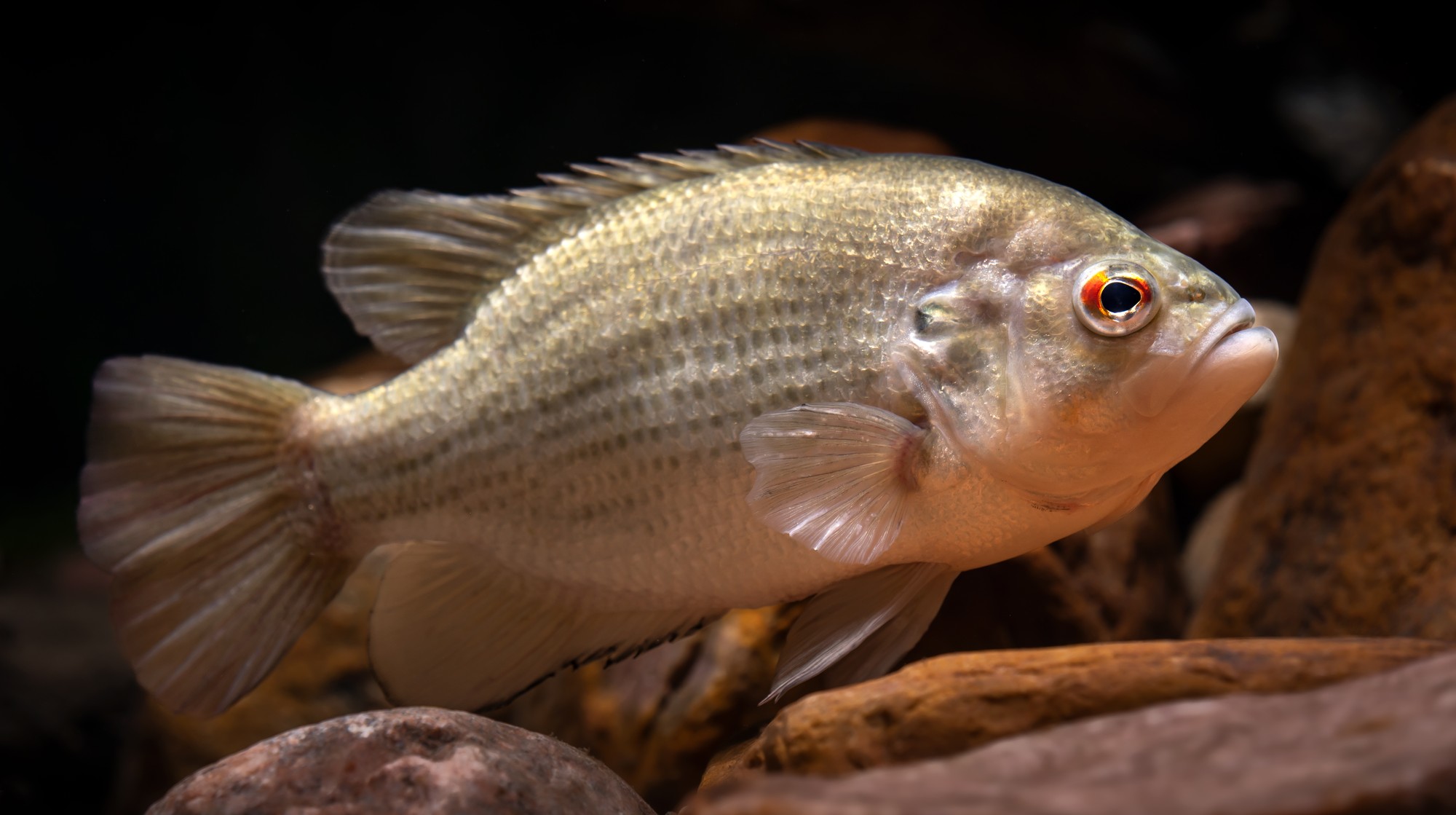
Ambloplites rupestris. Bright red eyes paired with a stout, thick-bodied build, unusual traits among panfish.
Rock Bass fishing uses a small soft-plastic crayfish imitation or live crayfish with a light spinning tackle, at dawn, at dusk, and at night. Rock bass have no stocking records in any state this project tracks, and they are not raised in a hatchery program.
Published by Fishypedia · Sources last checked September 21, 2026
Drafted by AI from the cited sources and checked before publishing.
- Active times
- Dawn, Dusk, and Night
- Line
- –
- Hook sizes
- –
- Stocked in
- 1 state
Identification
- Bright red eyes paired with a stout, thick-bodied build, unusual traits among panfish.
- 5 to 6 spines in the anal fin, versus just 3 on bluegill and most other true sunfish, the clearest way to tell them apart.
- Dark brown to bronze above with a distinct pattern of dark spots arranged in rows along the sides.
- Large mouth and unusually large eyes for a member of the sunfish family.
- Typically 6 to 11 inches and under a pound; trophy fish reach about 17 inches and nearly 3 pounds.
Sources: dnr.state.mn.us, accessed September 21, 2026 , mdc.mo.gov, accessed September 21, 2026 , wdfw.wa.gov, accessed September 21, 2026
Top lures
Sources: wdfw.wa.gov, accessed September 21, 2026 , mdc.mo.gov, accessed September 21, 2026
Top baits
Sources: mdc.mo.gov, accessed September 21, 2026 , wdfw.wa.gov, accessed September 21, 2026
Line & tackle
- Rod power
- Light spinning tackle.
Depth by season
Spring
Solitary males build saucer-shaped nests and spawn from the first week of April into early June.
Summer
Larger fish hold tight to boulders, logs, and vegetation beds in deep pools; most active at dawn, dusk, and after dark.
Fall
–
Sources: mdc.mo.gov, accessed September 21, 2026
Stocked behavior
Rock bass have no stocking records in any state this project tracks, and they are not raised in a hatchery program. Missouri's Department of Conservation describes them as a wild species whose solitary males build nests and spawn naturally in stream and lake margins each spring. Individuals live seven to nine years without hatchery involvement.
Sources: mdc.mo.gov, accessed September 21, 2026 , en.wikipedia.org, accessed September 21, 2026
Common mistakes
- Fishing open, featureless bottom; larger rock bass are found around boulders, logs and vegetation beds in deep pools.
- Only fishing during daylight hours; rock bass are most active in the twilight hours of dawn and dusk, and at night.
Where it's stocked
1 location shown. Tap a pin for details. · Open this area in Google Maps
Texas
State records
| State | Weight | Angler | Water | Year |
|---|---|---|---|---|
| Colorado | 1.08 lbs | Timothy Fisk | Ramah Reservoir (El Paso County) | 1979 |
| Kentucky | 1.63 lbs | H.S. White Cadiz, KY | Casey Creek Trigg County | 1975 |
| Michigan | 3.62 lbs | – | Holloway Reservoir, Genesee County | 1965 |
| Montana | 1.31 lbs. | Karson Campbell | Lower Crazy Head Springs Pond | 2014 |
| New York | 2 lb. 0 oz. | Jason Leusch | Port Bay (Lake Ontario), Wayne Co. | 2020 |
| Virginia | 2 lbs. 2 oz. | Larry Ball | Laurel Bed Lake | 1986 |
| Wisconsin | 2 lbs. 15 oz. | – | Shadow Lake, Waupaca County | 1990 |
| Wyoming | 1.76 lbs. | Randy Reece - Sheridan, WY | Farm Pond, Sheridan County | 2007 |
Common questions
What lures work for Rock Bass?
Small soft-plastic crayfish imitation, a soft plastic.
What bait works for Rock Bass?
Live crayfish.
Where do Rock Bass hold?
Spring: Solitary males build saucer-shaped nests and spawn from the first week of April into early June. Summer: Larger fish hold tight to boulders, logs, and vegetation beds in deep pools; most active at dawn, dusk, and after dark.
How big do Rock Bass get?
The Colorado record is 1.08 lbs from Ramah Reservoir (El Paso County) in 1979. The Kentucky record is 1.63 lbs from Casey Creek Trigg County in 1975. The Michigan record is 3.62 lbs from Holloway Reservoir, Genesee County in 1965. 5 more state records are on this page.