Spotted Bass
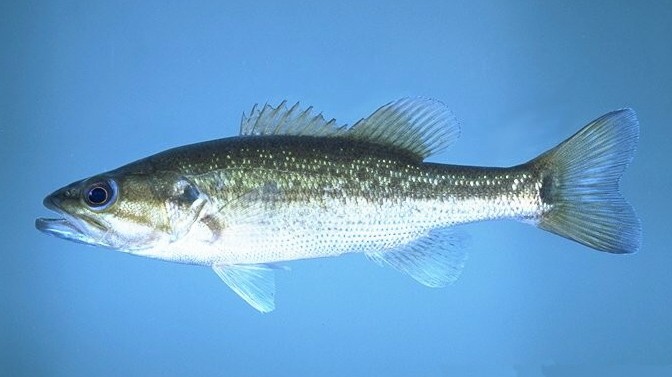
Micropterus punctulatus. Resembles a largemouth bass in coloration but has a smaller mouth; the upper jaw reaches only to or just past the eye.
Photos
Click a photo to expand it for a closer look.

Identification
- Resembles a largemouth bass in coloration but has a smaller mouth; the upper jaw reaches only to or just past the eye.
- Rows of dark spots below the lateral line under a dark horizontal stripe, the trait that gives the species its name.
- Lacks the vertical bars found on smallmouth bass and has noticeably smaller cheek scales than either relative.
- Typically 10-17 inches and up to about 4-5 pounds; a rough patch on the tongue is a reliable ID trait.
Depth by season
| Season | Depth | Note |
|---|---|---|
| Spring | – | Fish move into smaller tributary streams after high spring flows. |
| Summer | – | In reservoirs, spotted bass are generally found deeper than largemouth or smallmouth bass, sometimes to 100 feet. |
| Fall | – | Fish return to larger streams and the main reservoir as water levels and flows drop. |
| Winter | – | – |
Active times
- dawn
- dusk
Top lures
- Texas-rigged plastic worm (soft plastic , green pumpkin/black/blue): Worked slowly through cover and along deep structure, similar tactics to largemouth and smallmouth bass.
- Jig (jig , brown/black/blue): Dragged or hopped along deep rocky structure where spotted bass often hold deeper than other black bass.
- Crankbait (crankbait , crawfish/shad pattern): Cast around current-swept rocky banks and points in flowing reservoir arms.
Top baits
- Live crayfish: Hooked through the tail and fished near bottom around rock or gravel, a top natural forage item.
- Live minnow: Hooked through the lips and drifted along current-swept rocky banks, water spotted bass use more than largemouth do.
Line & tackle
- Rod power: The standard black bass outfit, a medium spinning or baitcasting rod; MDC places spotted bass in genus Micropterus with largemouth and smallmouth
Stocked behavior
Spotted bass generally reproduce naturally once established and are less dependent on repeated stocking than fish like trout; agencies mainly introduce them as fingerlings to start a new fishery. They favor cooler, flowing, less turbid water than largemouth bass but warmer, more current-swept water than smallmouth bass, and often hold deeper than either relative in a reservoir.
Common mistakes
- Fishing shallow cover exclusively; spotted bass often hold deeper than largemouth or smallmouth in the same reservoir.
- Overlooking current-swept rocky banks and points, water spotted bass favor over the calm coves largemouth prefer.
- Misidentifying spotted bass as largemouth; check jaw length, cheek scale size, and the rough patch on the tongue.
Where it's stocked
No stocking events recorded for Spotted Bass yet.
Sources
- identification (accessed 2026-09-19)
- identification (accessed 2026-09-19)
- depth_by_season (accessed 2026-09-19)
- active_times (accessed 2026-09-19)
- stocked_behaviour (accessed 2026-09-19)
- top_lures (accessed 2026-09-19)
- top_baits (accessed 2026-09-19)
- top_baits (accessed 2026-09-19)
- line_and_tackle (accessed 2026-09-19)
- common_mistakes (accessed 2026-09-19)
- common_mistakes (accessed 2026-09-19)
- depth_by_season (accessed 2026-09-19)