Lake Whitefish fishing
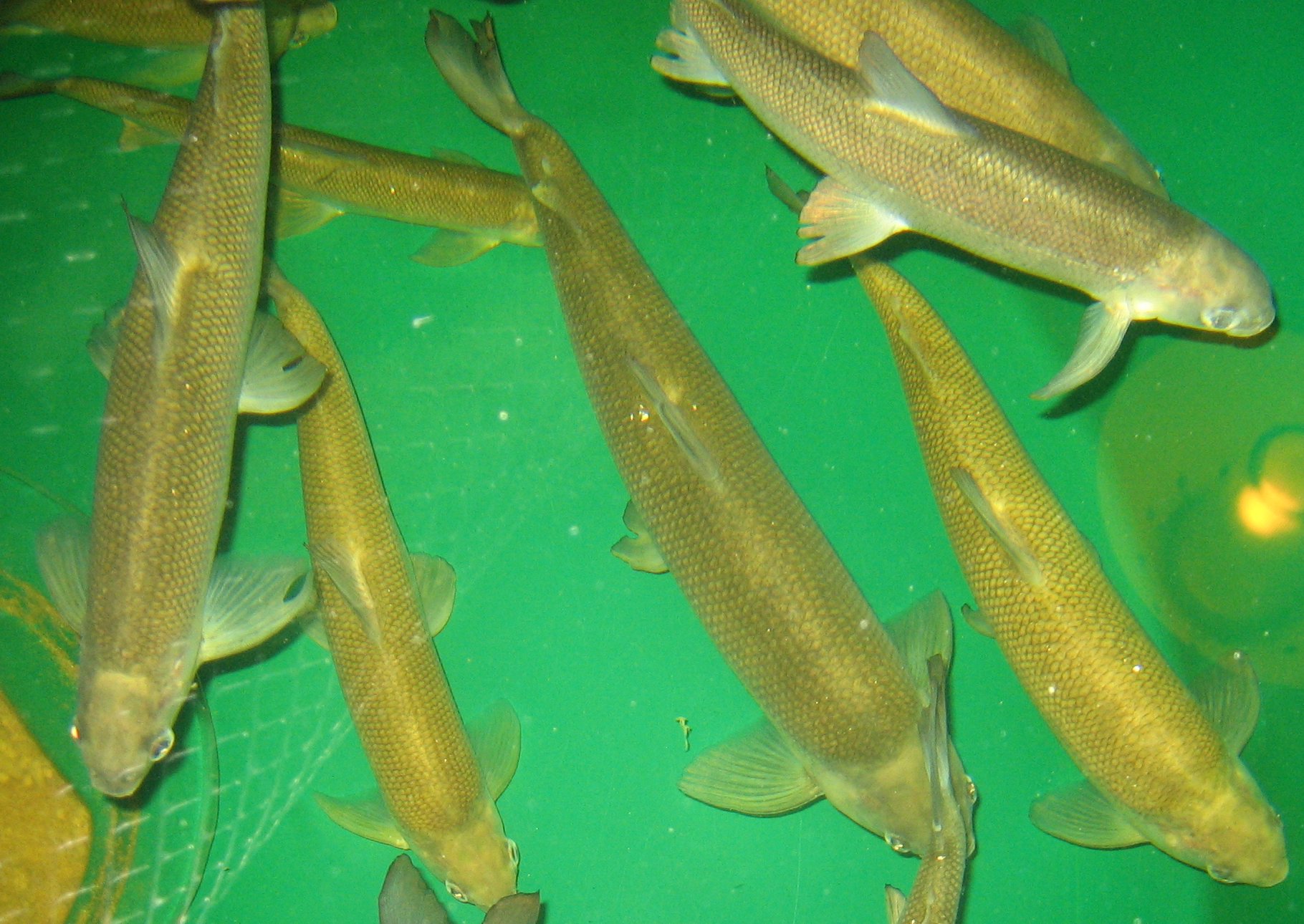
Coregonus clupeaformis. Slender body with a small, blunt, subterminal mouth set back under an overhanging snout, unlike cisco's upturned, terminal mouth.
Lake Whitefish fishing uses a Flasher or a Small minnow with a light ice-fishing jig rod, matched to a fish with a small, delicate mouth per Michigan DNR. Wild reproduction has collapsed in parts of Lakes Michigan and Huron: invasive mussels strip the plankton young whitefish eat, leaving some populations with no surviving hatchlings for two decades.
By Nicolas Sartor · Last verified September 23, 2026
- Active times
- –
- Line
- –
- Hook sizes
- –
- Stocked in
- 2 states
Identification
- Slender body with a small, blunt, subterminal mouth set back under an overhanging snout, unlike cisco's upturned, terminal mouth.
- Two dorsal fins, including a small adipose fin, and clear or nearly clear fins overall.
- Greenish-brown back grading to silver sides and a white belly; a small head relative to a deep body has earned it the nickname 'humpback.'
- Adults commonly reach several pounds and can top 20 pounds, far larger on average than cisco.
Sources: michigan.gov, accessed September 23, 2026 , dnr.wisconsin.gov, accessed September 23, 2026 , dnr.state.mn.us, accessed September 23, 2026
Top lures
Tied inline 1 to 2 feet below the ice hole as an attractor blade, per Minnesota DNR.
Tied another 1 to 2 feet below the flasher; Minnesota DNR describes this as the standard winter combo.
Fished in open water during spring insect hatches, per Minnesota DNR.
Fished in open water during spring insect hatches, an alternative to small spinners, per Minnesota DNR.
Top baits
Fished on a jig below a flasher through the ice, about 1 to 2 feet under it, per Minnesota DNR.
Suspended under a bobber anywhere in the water column through the ice; Minnesota DNR notes this draws strikes too.
Line & tackle
- Rod power
- Light ice-fishing jig rod, matched to a fish with a small, delicate mouth per Michigan DNR
Depth by season
Spring · 0–25 ft
Newly hatched young stay in the same shallow rock or sand shallows under 25 feet where whitefish spawn, moving to deeper water by early summer.
Summer
Adults school in open Great Lakes water at depths up to 200 feet or more as the water warms and stratifies.
Fall · 0–25 ft
Begins moving toward shallow, rocky or sandy spawning shoals as water cools below 45 F between mid-October and early December.
Sources: michigan.gov, accessed September 23, 2026 , dnr.state.mn.us, accessed September 23, 2026
Stocked behavior
Wild reproduction has collapsed in parts of Lakes Michigan and Huron: invasive mussels strip the plankton young whitefish eat, leaving some populations with no surviving hatchlings for two decades. Since 2026, Michigan DNR and the Little Traverse Bay Band of Odawa Indians have collected wild adults and hatched eggs at Wolf Lake hatchery, a genetic-rescue effort, not put-and-take stocking.
Where it's stocked
2 locations shown. Tap a pin for details. · Open this area in Google Maps
State records
| State | Weight | Angler | Water | Year |
|---|---|---|---|---|
| Michigan | 14.28 lbs. | – | Lake Superior, Ontonagon County | 1993 |
| Minnesota | 13 lbs. 9 oz. | – | Lake of the Woods, Lake of the Woods County | 2019 |
| Wisconsin | 12 lbs. 6.4 oz. | – | Lake Michigan, Sheboygan County | 2013 |