Muskellunge fishing
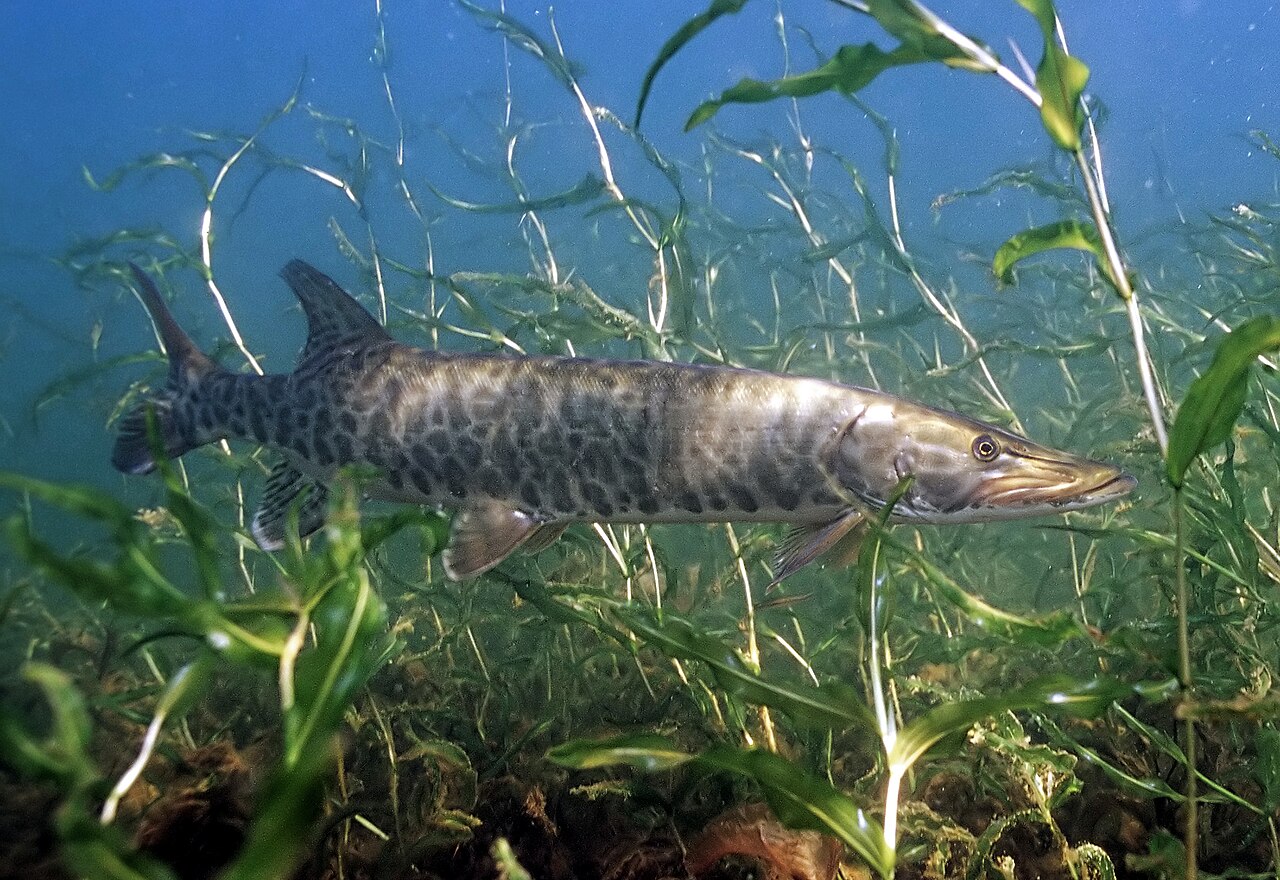
Esox masquinongy. Dark spots or bars on a light silver, light green, or light brown background, the opposite pattern of northern pike.
Muskellunge fishing uses a large bucktail spinner or live sucker or shiner on 50 to 90 lb line, at dawn and at dusk. Muskellunge reproduce naturally in many established waters, but fisheries outside their native range often depend on hatchery stocking as fingerlings rather than catchable-size fish.
Published by Fishypedia · Sources last checked September 19, 2026
Drafted by AI from the cited sources and checked before publishing.
- Active times
- Dawn and Dusk
- Line
- 50–90 lb
- Hook sizes
- Treble hooks of at least 3/0, sized to the lure or bait
- Stocked in
- 6 states
- Peak in MI
- October
Identification
- Dark spots or bars on a light silver, light green, or light brown background, the opposite pattern of northern pike.
- Distinguished from northern pike by pore count under the jaw: six or more pores means muskellunge, five or fewer means pike.
- Elongated, torpedo-shaped body with dorsal, anal, and tail fins set far back near the tail.
- One of the largest members of the pike family; Minnesota DNR says its muskies can grow to 50 pounds or larger.
Sources: dnr.state.mn.us, accessed September 19, 2026 , dnr.wisconsin.gov, accessed September 19, 2026
Top lures
Top baits
Fished under a large float or free-lined near weed beds and drop-offs.
Sources: pa.gov, accessed September 19, 2026
Line & tackle
- Line
- 50–90 lb
- Rod power
- Rod at least 7 feet long with fast action and a heavy power rating (Pennsylvania Fish and Boat Commission), matched with a wire or heavy fluorocarbon leader
- Hook sizes
- Treble hooks of at least 3/0, sized to the lure or bait
Sources: dnr.state.mn.us, accessed September 19, 2026 , pa.gov, accessed September 19, 2026 , ohiodnr.gov, accessed September 19, 2026
Stocked behavior
Muskellunge reproduce naturally in many established waters, but fisheries outside their native range often depend on hatchery stocking as fingerlings rather than catchable-size fish. Minnesota's program has introduced muskies into dozens of lakes beyond their native range, and studies there found stocked muskies don't strip a lake of walleye or other gamefish as anglers sometimes assume.
Common mistakes
- Giving up on a follow; muskellunge often follow a lure to the boat without striking it.
- Skipping the figure eight; if a muskellunge follows your lure, make a figure eight with the lure at the side of the boat.
- Confusing muskellunge with northern pike; the foolproof way to tell them apart is to count the pores on one side of the underside of the jaw.
Best time to fish Muskellunge
Most commonly stocked in October in Michigan, based on 411 stocking events on record.
Most commonly stocked in October in New York, based on 166 stocking events on record.
Where it's stocked
90 locations shown. Tap a pin for details. · Open this area in Google Maps
Michigan
Minnesota
New York
Ohio
Wisconsin
State records
| State | Weight | Angler | Water | Year |
|---|---|---|---|---|
| Kentucky | 47.00 lbs | Sarah Terry Mt. Sterling, KY | Cave Run Lake | 2008 |
| New York | 69 lb. 15 oz. | Arthur Lawton | St. Lawrence River, Jefferson Co. | 1957 |
| Wisconsin | 69 lbs. 11 oz. | – | Chippewa Flowage, Sawyer County | 1949 |
Common questions
What lures work for Muskellunge?
Large bucktail spinner, a spinner in white, black, and firetiger. Large casting spoon, a spoon in silver and copper. Large jointed plug, a crankbait in perch pattern, silver, and black.
What bait works for Muskellunge?
Live sucker or shiner (4 to 10 inches): Fished under a large float or free-lined near weed beds and drop-offs. Large dead sucker.
How big do Muskellunge get?
The Kentucky record is 47.00 lbs from Cave Run Lake in 2008. The New York record is 69 lb. 15 oz. from St. Lawrence River, Jefferson Co. in 1957. The Wisconsin record is 69 lbs. 11 oz. from Chippewa Flowage, Sawyer County in 1949.