White Bass
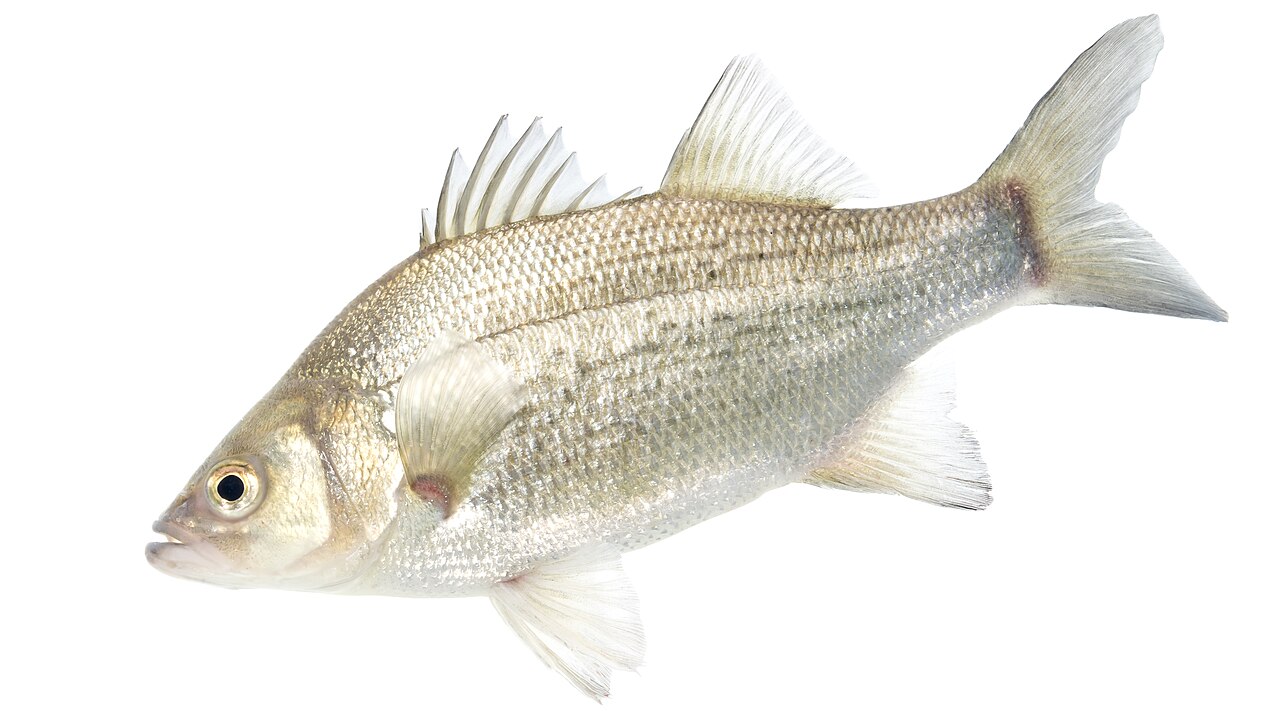
Morone chrysops. Gray, charcoal, or green back with silvery sides and a white belly.
Photos
Click a photo to expand it for a closer look.
.jpg)
Identification
- Gray, charcoal, or green back with silvery sides and a white belly.
- Five to seven longitudinal stripes on each side, fewer than the seven to nine seen on striped bass.
- Deeper, less streamlined body than a striped bass; typically caught under a pound but occasionally over 3 pounds.
- Common in nearly all larger reservoirs, generally found in large open-water schools.
Depth by season
| Season | Depth | Note |
|---|---|---|
| Spring | – | Spawning runs push schools miles upriver from the reservoir into tributary streams and deeper pools. |
| Summer | – | Most fish are back in the reservoir, holding in open water and feeding on schools of shad. |
| Fall | – | Schools stay in the open reservoir on shad and minnows; lights at night pull baitfish in and the bass feed below them. |
| Winter | – | Fish hold in open water, and may come near shore where water is pumped into an upground reservoir. |
Active times
- dawn
- dusk
- night
Top lures
- Jig (jig , white/chartreuse): Cast into schools along tributary streams during the spring spawning run.
- Small spinner (spinner , silver/chartreuse): Cast and retrieved near deeper pools where anglers gather during the spawning run.
- Casting spoon (spoon , silver/chrome): Cast into visible surface-feeding schools chasing shad in the open reservoir.
Top baits
- Live minnow under a bobber: Suspended under a bobber or slow-trolled near schools, and tipped onto a small jig during the spring run.
- Live minnow below a night light: Fished under the schooling baitfish that floating or submerged lights draw in, a strong late-spring through fall tactic.
Line & tackle
- Line: 6–12 lb
- Rod power: Light to medium spinning rod for casting small jigs and spinners to schooling fish
Stocked behavior
White bass are prolific and reproduce naturally once established, so where they turn up outside their native range it is usually the result of a one-off introduction rather than repeat stocking: Missouri credits its Ozark reservoir populations to introductions. They form large, easily located schools, and spawning runs concentrate fish miles upriver where anglers can reach them from shore.
Common mistakes
- Fishing the open reservoir when a spawning run is on; schools push miles upriver into tributary pools.
- Throwing big lures; Ohio's producers are small jigs with plastic tails and small flashy spoons and spinners.
- Not following the shad; watch for diving gulls and surface boils, and work the wind-driven side of the lake.
State records
| State | Weight | Angler | Water | Year |
|---|---|---|---|---|
| Utah | 4 lbs. 1 oz. | John R. Welcker | Utah Lake | 1970 |
Source: Utah's official record page , accessed 2026-09-19.
Where it's stocked
1 location shown. Click a pin for details.
Utah
Sources
- identification (accessed 2026-09-19)
- identification (accessed 2026-09-19)
- depth_by_season (accessed 2026-09-19)
- stocked_behaviour (accessed 2026-09-19)
- top_lures (accessed 2026-09-19)
- line_and_tackle (accessed 2026-09-19)
- identification (accessed 2026-09-19)
- active_times (accessed 2026-09-19)
- active_times (accessed 2026-09-19)
- stocked_behaviour (accessed 2026-09-19)
- top_baits (accessed 2026-09-19)
- top_baits (accessed 2026-09-19)
- common_mistakes (accessed 2026-09-19)
- common_mistakes (accessed 2026-09-19)
- depth_by_season (accessed 2026-09-19)