How long stocked trout stay in a lake is the question every angler wants a number for, and neither Washington nor Utah publishes one per lake. Harvest, predation and natural attrition all vary by water, and no public dataset tracks a plant after the truck leaves. What both states do publish, per event, is when each lake got restocked. That record is the closest thing to an honest answer, and it is specific to the lake you care about.
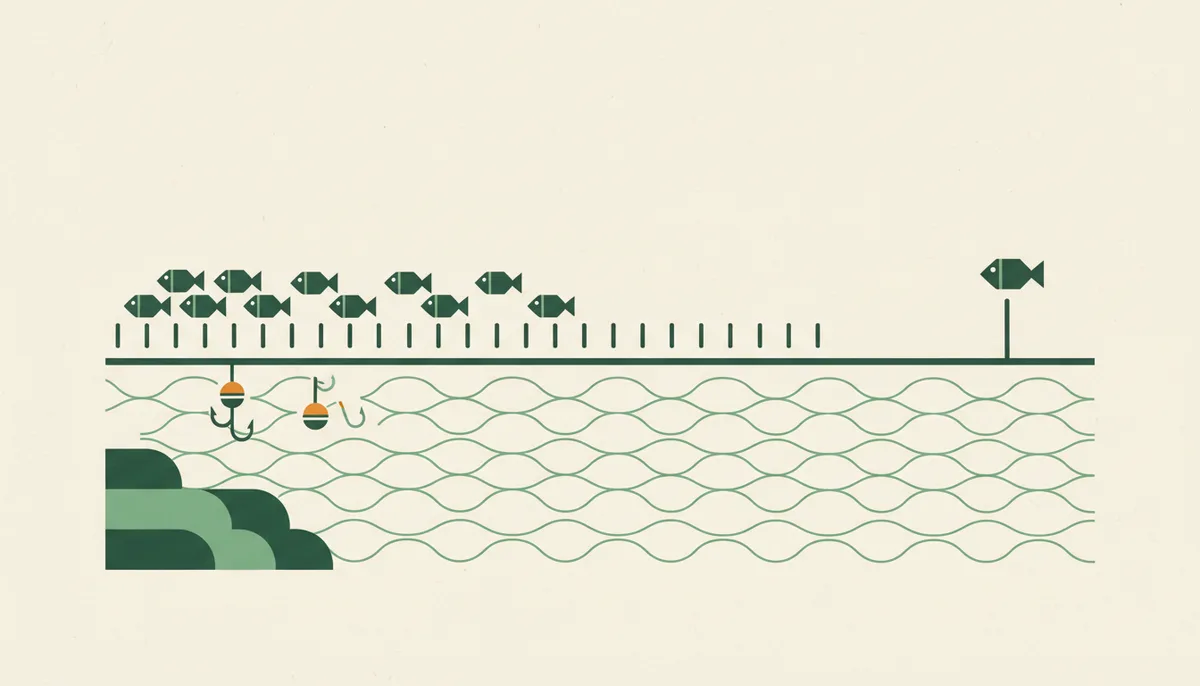
Restocking frequency is the signal that exists
A lake stocked once in April and not again that year is a different bet in August than a lake restocked every few weeks all summer. Mayfield Lake in Lewis County, Washington carries 43 rainbow trout plants between April 2025 and August 2026, at 9 to 12.8 inches. Strawberry Reservoir in Utah carries 561 stocking events between February 2016 and June 2026. Both hold up across a long season because they get restocked repeatedly, not because any single truckload lasts that long.
A lake with one plant on record and nothing since is worth fishing soon after that date and not counting on later in the year. Check the event count and the dates on a lake’s own stocking history table before assuming a spring plant means good fishing in August.
Species matters too
Rainbow trout is the default catchable plant in both states: across the 135 lakes tracked here it accounts for 5,453 plants. Brown trout is far rarer at 137, 127 of them in Utah, and the stocked size swings much wider: from 1.76 inches to 21.26 inches depending on the plant. A lake’s own stocking history shows which size class it actually received. Do not assume every trout plant behaves the same way because the species column matches.
The practical check
Before planning a trip around an older stocking date, look at two things on the lake’s page: how many plants are on record, and how recent the most recent one is. A high count with a recent date is an actively maintained fishery. A single old date means you probably missed the window.