Largemouth Bass
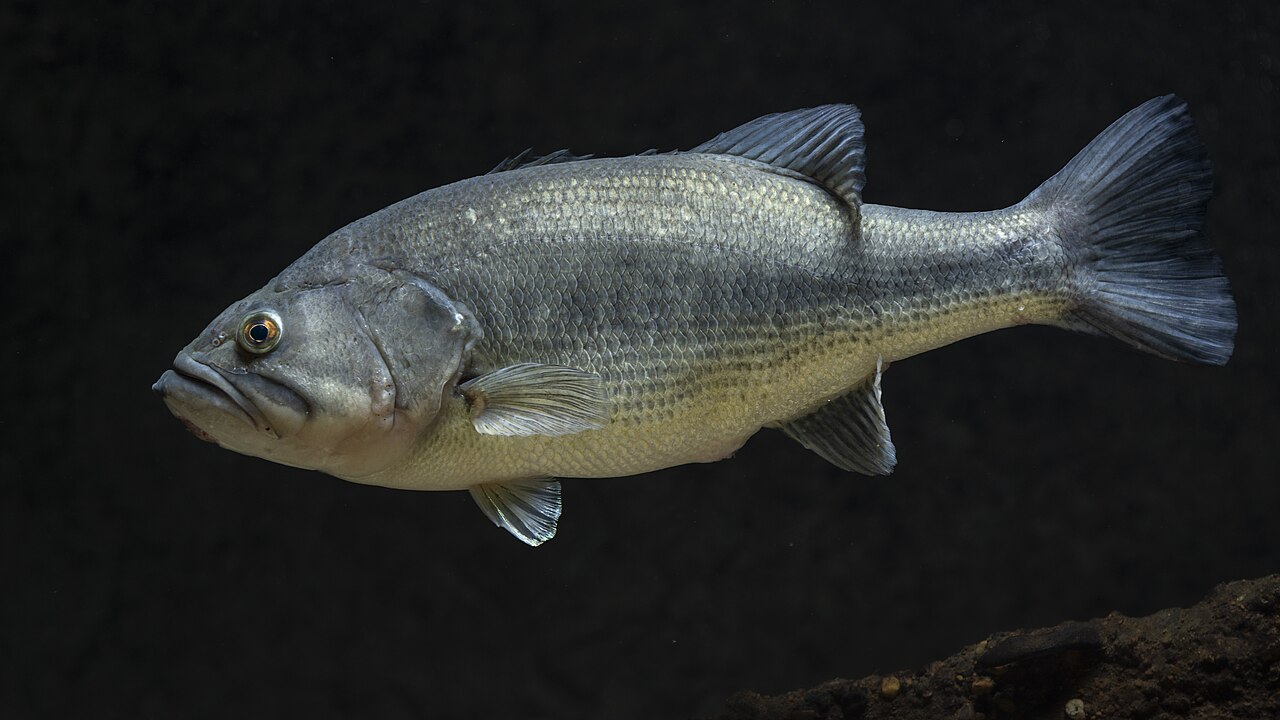
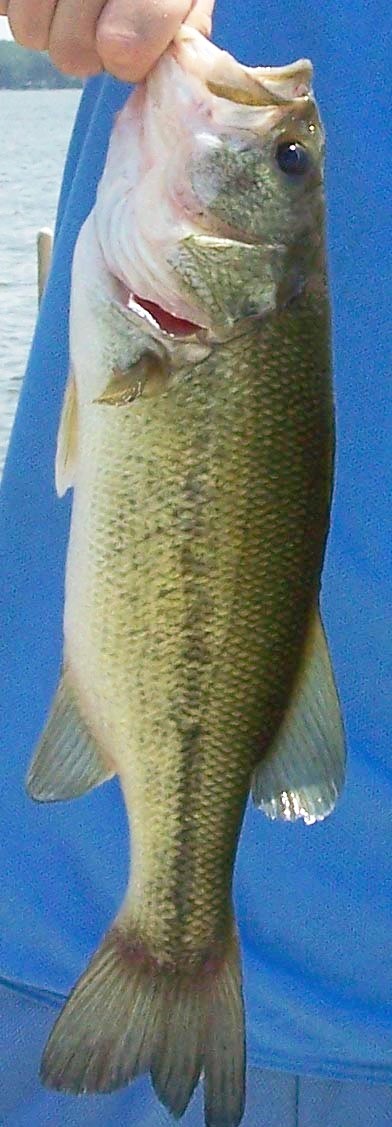
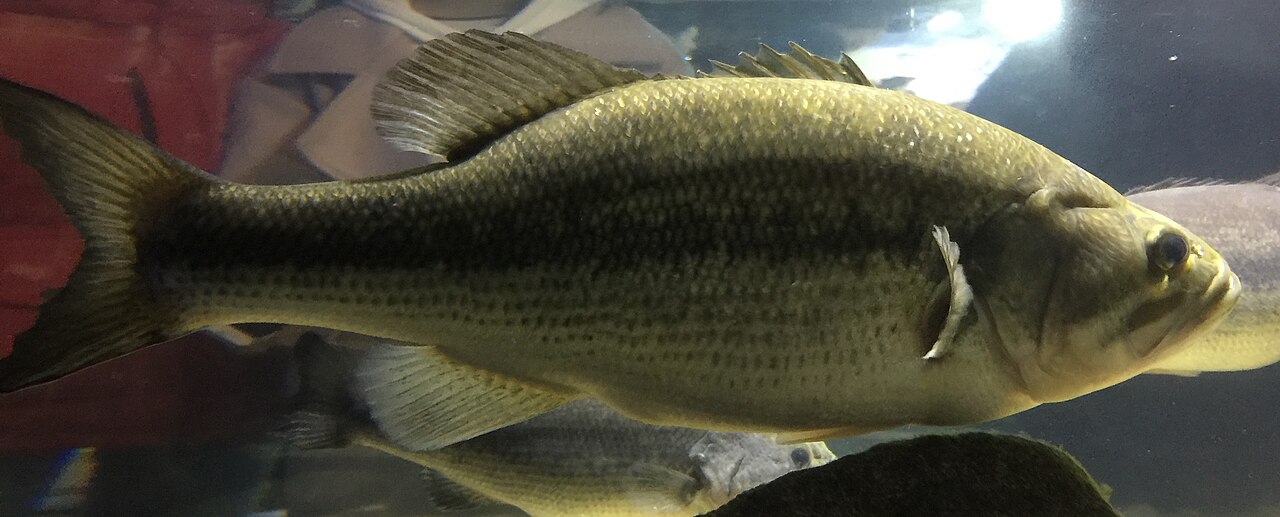
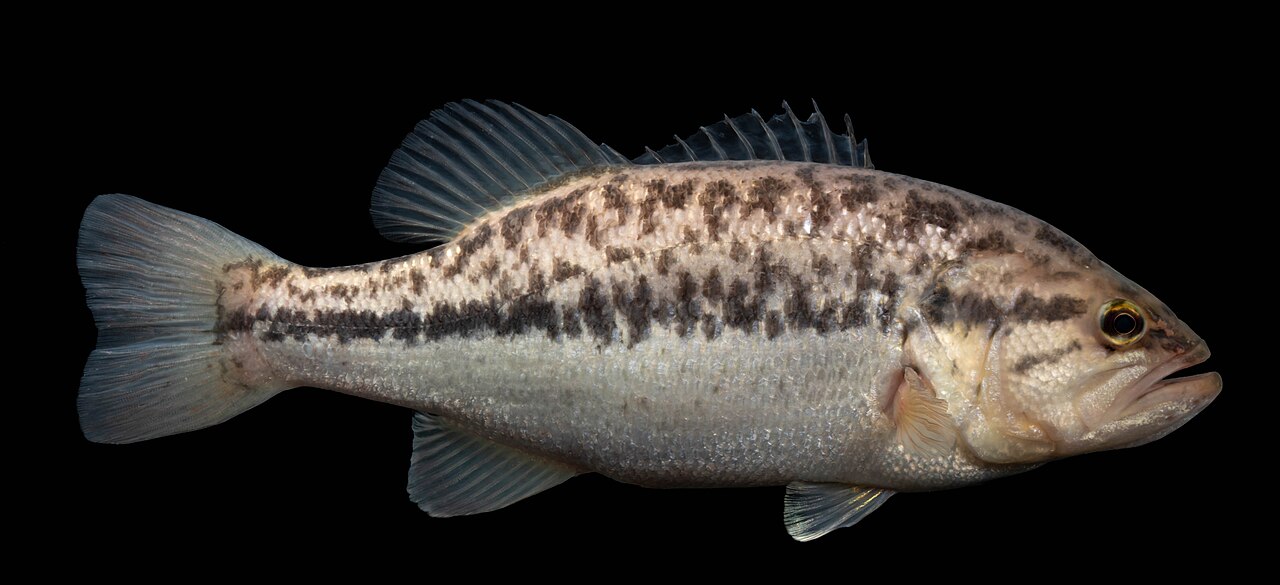
Micropterus salmoides. Greenish-black body with a bold dark horizontal band along the midline, fading toward a lighter belly.
Photos
Click a photo to expand it for a closer look.
_June_2023_(cropped).jpg)



Identification
- Greenish-black body with a bold dark horizontal band along the midline, fading toward a lighter belly.
- Upper jaw (maxillary) extends past the back of the eye, the key trait separating it from smallmouth bass.
- Typically 12 to 15 inches in most lakes, with quality waters producing fish 17 to 20+ inches.
Depth by season
| Season | Depth | Note |
|---|---|---|
| Spring | – | Fishing improves as water warms and fish move onshore, peaking during the spawn. |
| Summer | – | Bite slows during the heat of the day; dawn and dusk are the most productive windows. |
| Fall | – | Catch rates improve again as water cools, vegetation dies back, and prey becomes more available. |
| Winter | – | The toughest season; fish move offshore into deeper water and feed slowly. |
Active times
- dawn
- dusk
Top lures
- Texas-rigged plastic worm (soft plastic , black/blue/green pumpkin/junebug): Slow presentation in cold water or worked through dense cover year-round.
- Spinnerbait (spinner , chartreuse/white/black): Cold or stained water around cover; slow the retrieve as temperatures drop.
- Jerkbait (crankbait , natural shad/silver/black): Early morning in warming spring water, worked with a twitch-pause retrieve.
- Jig-and-pig (jig , black/blue/brown): Cold water around brush piles and fallen trees, fished slowly on bottom.
- Deer hair popper (fly , white/yellow/frog pattern): Topwater fly presentations over cover during low-light warm-season mornings and evenings.
Top baits
- Nightcrawler: Rigged weedless or on a small hook under a bobber near cover, a simple option alongside artificial lures.
- Live minnow: Hooked through the back or lips and fished under a bobber or slow-trolled near cover, imitating the small fish adult bass feed on.
Line & tackle
- Line: 8–17 lb
- Rod power: Medium-heavy 7'6" spinning or baitcasting rod for plastics and jigs; 5-6 weight, 8 ft fly rod for topwater
- Hook sizes: Size 3/0 to 4 hooks
Stocked behavior
Largemouth bass are less commonly restocked than trout because populations reproduce naturally once established; agencies mainly stock fingerlings to start a new fishery rather than replenish an existing one. From the start, young bass seek dense cover such as fallen trees, brush piles, and vegetation rather than open water, mirroring adult habitat preferences almost immediately after release.
Common mistakes
- Fishing fast in cold water; bass in cold water want a slow presentation worked on bottom or through cover.
- Pulling away from cover after a cold front, which is exactly when Ohio finds bass sitting closest to it.
- Ignoring where the baitfish are; from summer into fall bass location tracks the bait, with coves and secondary points best.
State records
| State | Weight | Angler | Water | Year |
|---|---|---|---|---|
| Washington | 12.53 lbs | Bill Evans | Lake Bosworth, Snohomish County | 2016 |
| Utah | 10 lbs. 2 oz. | Sam LaManna | Lake Powell | 1974 |
Sources: Washington's official record page , Utah's official record page , accessed 2026-09-19.
Best time to fish Largemouth Bass
Computed from every real stocking date on record, not a general seasonal guess.
Utah
Most commonly stocked in September in Utah, based on 20 stocking events on record.
Where it's stocked
7 locations shown. Click a pin for details.
Utah
Sources
- identification (accessed 2026-09-18)
- depth_by_season (accessed 2026-09-18)
- active_times (accessed 2026-09-18)
- top_lures (accessed 2026-09-18)
- top_baits (accessed 2026-09-18)
- line_and_tackle (accessed 2026-09-18)
- stocked_behaviour (accessed 2026-09-18)
- line_and_tackle (accessed 2026-09-19)
- line_and_tackle (accessed 2026-09-19)
- common_mistakes (accessed 2026-09-19)
- common_mistakes (accessed 2026-09-19)