Whether the fish stocked at your lake is big enough to catch depends entirely on what size it went in at, and that number is published. Agencies stock at every stage from quarter-inch fry to ten-pound broodstock, and both states this site tracks publish a per-event size: Utah as an average length in inches, Washington as fish per pound, which converts to a length using WDFW’s own table. Most anglers never look at that column.
Two different programs, one word
Put-and-take stocking drops fish in at a size anglers can catch right away. Across the Washington lakes tracked here, 84 percent of the rainbow trout planted, by fish count, go in between 9 and 11 inches. American Lake in Pierce County is a straightforward example: its twelve plants on record run 9.8 to 12.8 inches, arriving between March and June each year plus a late-November plant in 2025.
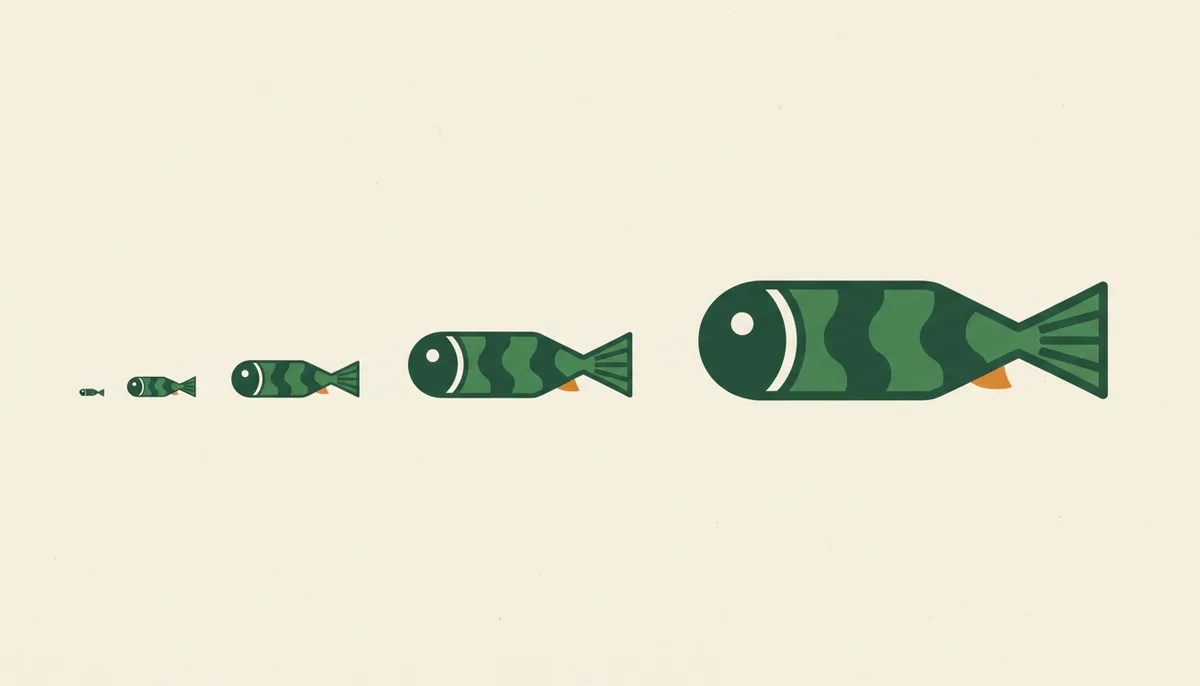
Put-and-grow stocking drops fish in small, sometimes very small, and leaves them to grow into a fishery. Walleye fry at Big Sand Wash Reservoir in Utah have gone in at 0.28 to 0.32 inches, in April plants ranging from 25,000 fish to nearly 2.5 million in a single day. Largemouth bass in Utah’s data split two ways: twelve of the twenty plants are between 1.8 and 3.4 inches, and the other eight are adult transplants between 13 and 17 inches. Kokanee salmon are stocked small and consistently so: 282 of the 293 kokanee plants tracked here fall between 2 and 4 inches. None of the small plants are targetable the week they go in.
Why this matters before you drive anywhere
A lake’s “last stocked” date tells you a truck showed up. It does not tell you what the truck was carrying. A recent plant of 0.28 inch walleye fry is not a better bet this weekend than no recent plant at all; those fish will not be catchable size for years. A lake stocked six weeks ago with 10 inch rainbow trout may still be fishing well.
One Washington-specific catch: WDFW’s catchable trout plant report only covers fish three per pound or larger, so nothing in Washington’s data here is smaller than 9 inches. That is a property of the report, not of the state’s hatchery program. Utah’s report covers plants at every size, which is why every fry example above is a Utah one.
Before planning a trip around a recently stocked lake, open that lake’s own stocking history table and read the average length column, not just the date. A species page like walleye or kokanee salmon shows the typical stocked size for that species, so you know roughly what to expect before you check a specific lake.
The short version
- Catchable plants, roughly 9 inches and up, are worth fishing as soon as they go in.
- Fry and fingerling plants, under 4 inches, are a multi-year investment rather than a this-weekend target.
- Read the average length on a lake’s stocking table before driving out on a recent date alone.