Walleye
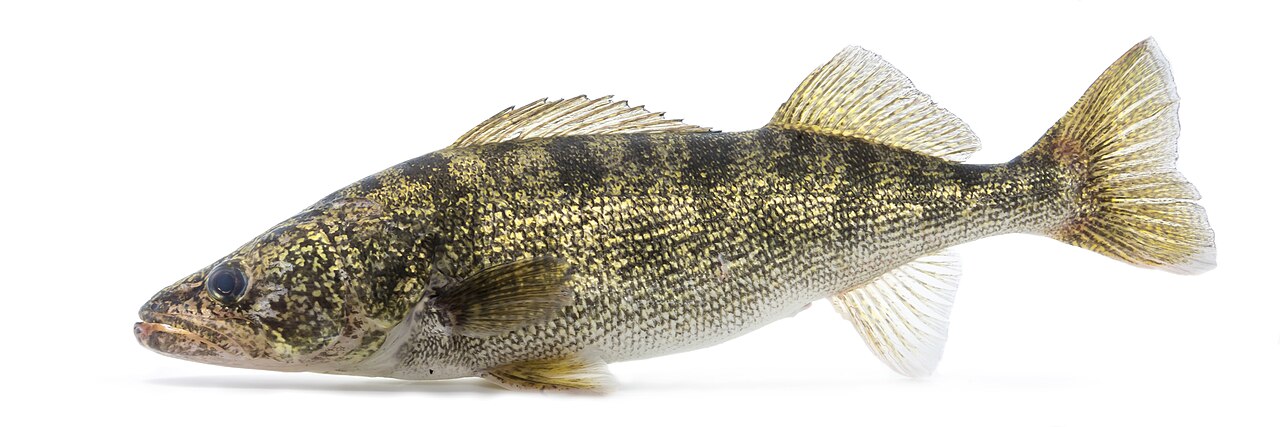
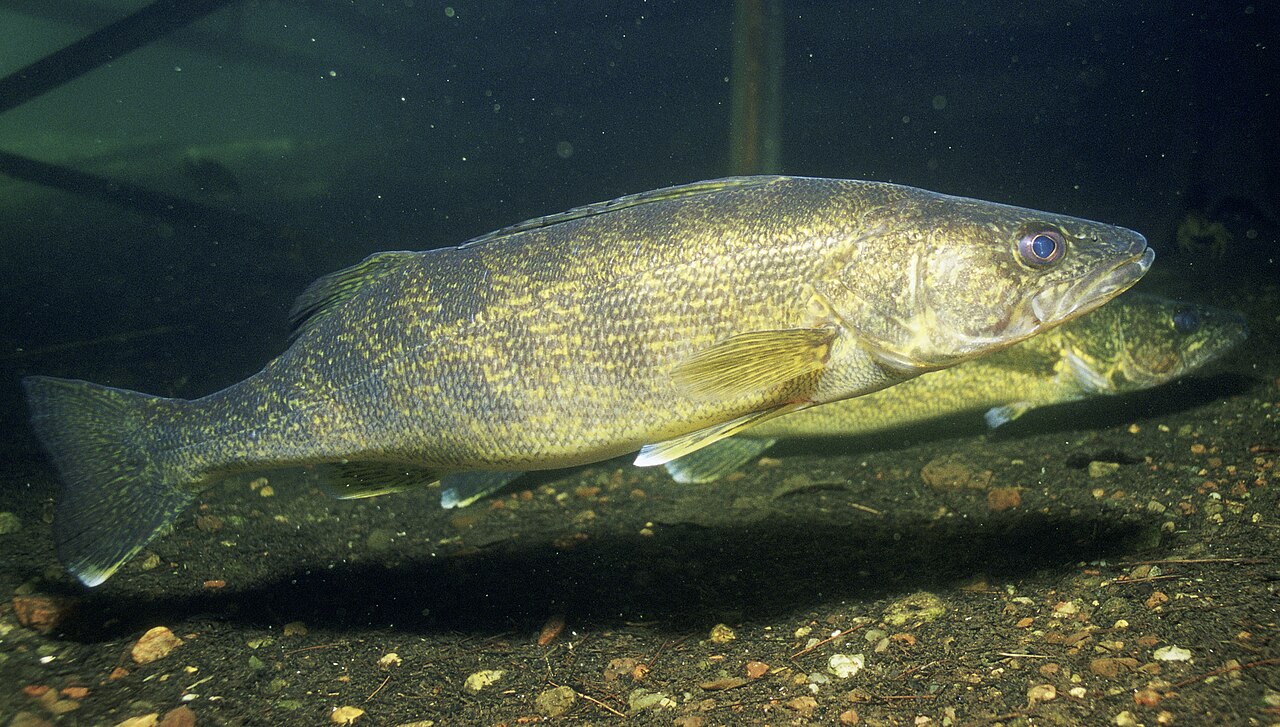
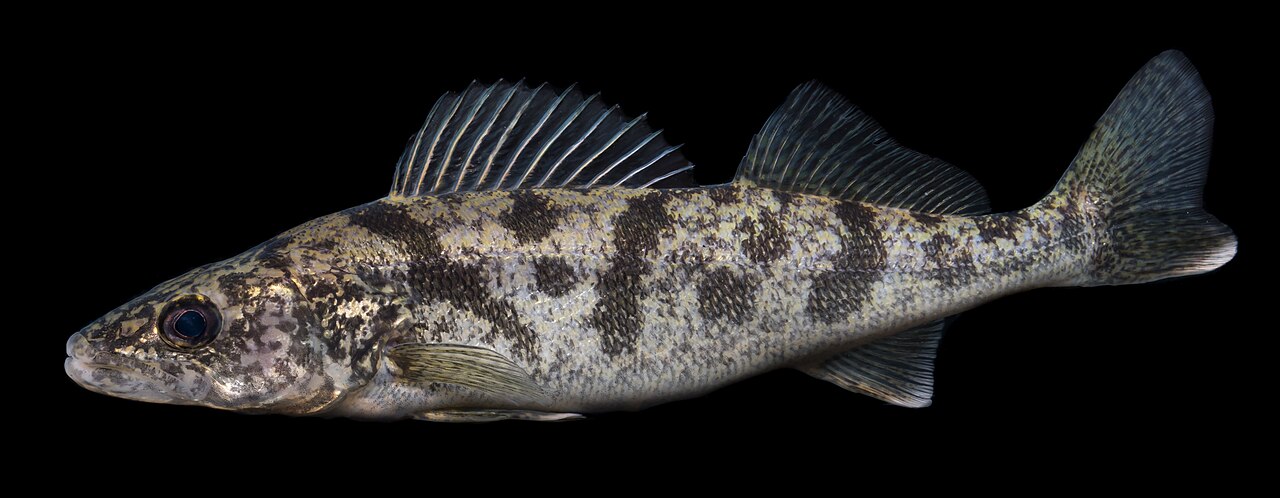
Sander vitreus. Two separate dorsal fins, with a dark spot at the base of the spiny first dorsal fin.
Photos
Click a photo to expand it for a closer look.
_(1).jpg)

.jpg)
_-_51780343419_(cropped).jpg)
Identification
- Two separate dorsal fins, with a dark spot at the base of the spiny first dorsal fin.
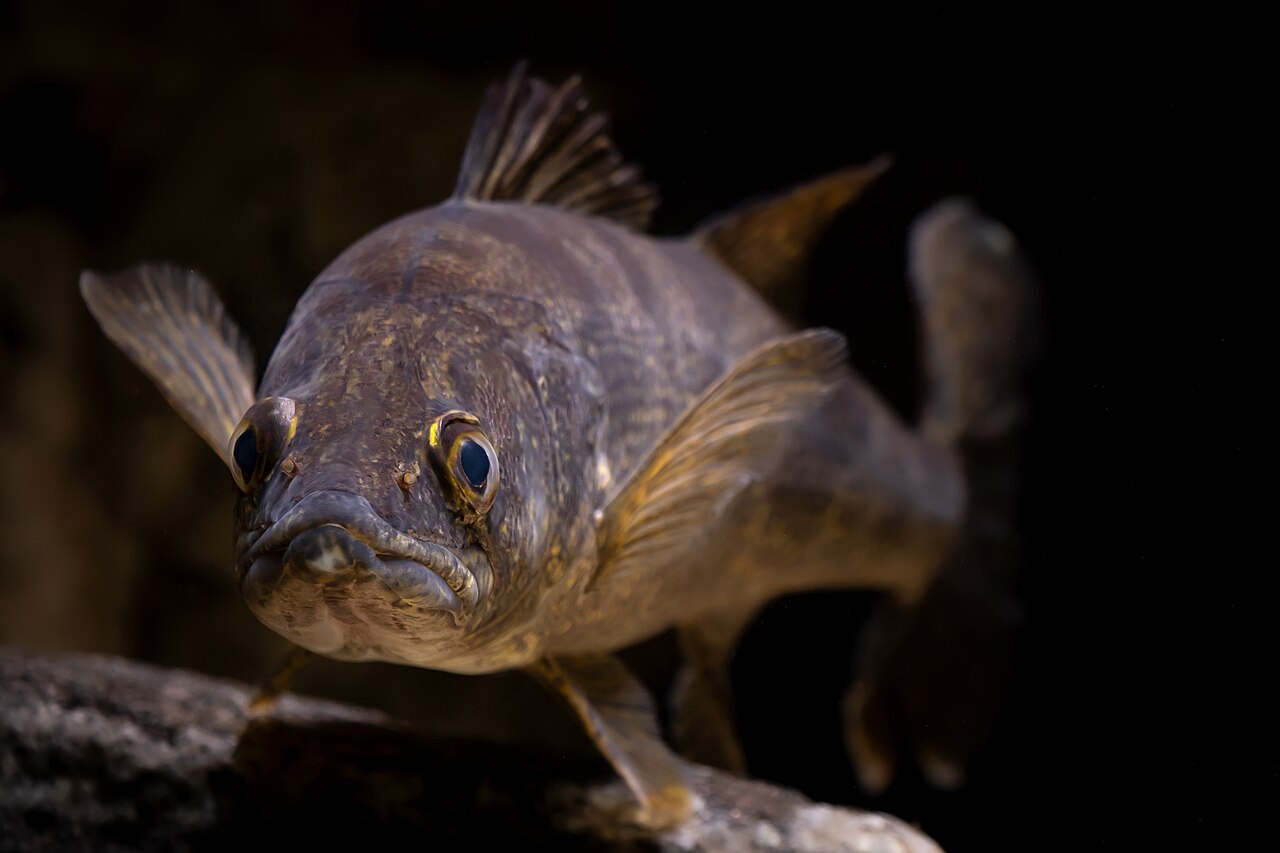
- Prominent canine teeth and a white margin on the lower lobe of the tail fin.
- Lacks the dark vertical bars seen on yellow perch, a common source of misidentification.
- Typically 16 to 25 inches (2-12 lbs); quality waters can produce 20-30 inch fish up to 15 lbs.
Depth by season
| Season | Depth | Note |
|---|---|---|
| Spring | 18–25 ft | General daytime depth range; fish stay close to bottom, often near rocky break-lines. |
| Summer | 18–25 ft | Same bottom-oriented daytime pattern; weed beds can also hold fish seasonally. |
| Fall | 18–25 ft | Bottom-oriented pattern continues as water cools toward winter. |
| Winter | – | Fish move into deeper water than the rest of the year; most bites come from probing deep structure. |
Active times
- dawn
- dusk
- night
Top lures
- Jig (jig , chartreuse/orange/white): Bounced along bottom near rocky break-lines and drop-offs, especially effective at night.
- Deep-diving crankbait (crankbait , firetiger/chartreuse/orange): Trolled over rocky structure and drop-offs in bright colors to draw strikes.
- Casting spoon (spoon , silver/gold): Vertical jigged or cast near break-lines and structure.
- Spinner harness (spinner , chartreuse/silver/gold): Trolled with a nightcrawler, small split shot, and a 1-2 oz barrel weight along bottom contours.
Top baits
- Nightcrawler on a spinner harness: Threaded onto a harness with a wire leader, small split shot, and 1-2 oz barrel weight, trolled near bottom.
- Nightcrawler on a jighead: Tipped on a jig and bounced slowly along rocky bottom and break-lines.
Line & tackle
- Line: 6–12 lb
- Rod power: Medium spinning or casting rod for jigging and trolling
- Hook sizes: Size 4 and 6 hooks for bait
Stocked behavior
Utah fisheries such as Willard Bay are maintained largely by stocking millions of walleye fry each year, and studies there found stocked fry make up a larger share of each new year class than fish from natural reproduction. As tiny fry, these fish are released into open water to fend for themselves immediately, unlike catchable trout, and won't reach catchable size for one or more growing seasons.
Common mistakes
- Fishing fast and high in the water column; WDFW's rule is fish on the bottom, fish slowly, and use nightcrawlers.
- Trolling a light or dull hook; WDFW calls for a stout, sharp hook plus a short wire leader to survive abrasive rock.
- Ignoring rocky break-lines and depth changes in favor of open, featureless bottom.
State records
| State | Weight | Angler | Water | Year |
|---|---|---|---|---|
| Washington | 20.32 lbs | John Grubenhoff | Lake Wallula, Benton County | 2014 |
| Utah | 15 lbs. 9 oz. | Jeffery Tanner | Provo River | 1991 |
Sources: Washington's official record page , Utah's official record page , accessed 2026-09-19.
Best time to fish Walleye
Computed from every real stocking date on record, not a general seasonal guess.
Utah
Most commonly stocked in April in Utah, based on 200 stocking events on record.
Where it's stocked
10 locations shown. Click a pin for details.
Utah
Sources
- identification (accessed 2026-09-18)
- depth_by_season (accessed 2026-09-18)
- active_times (accessed 2026-09-18)
- active_times (accessed 2026-09-19)
- active_times (accessed 2026-09-19)
- top_lures (accessed 2026-09-18)
- top_baits (accessed 2026-09-18)
- line_and_tackle (accessed 2026-09-18)
- stocked_behaviour (accessed 2026-09-18)
- line_and_tackle (accessed 2026-09-19)
- line_and_tackle (accessed 2026-09-19)
- line_and_tackle (accessed 2026-09-19)
- common_mistakes (accessed 2026-09-19)
- common_mistakes (accessed 2026-09-19)