Bluegill
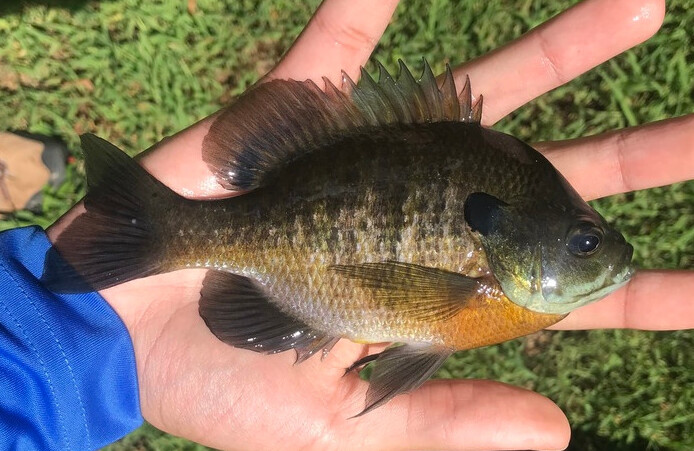
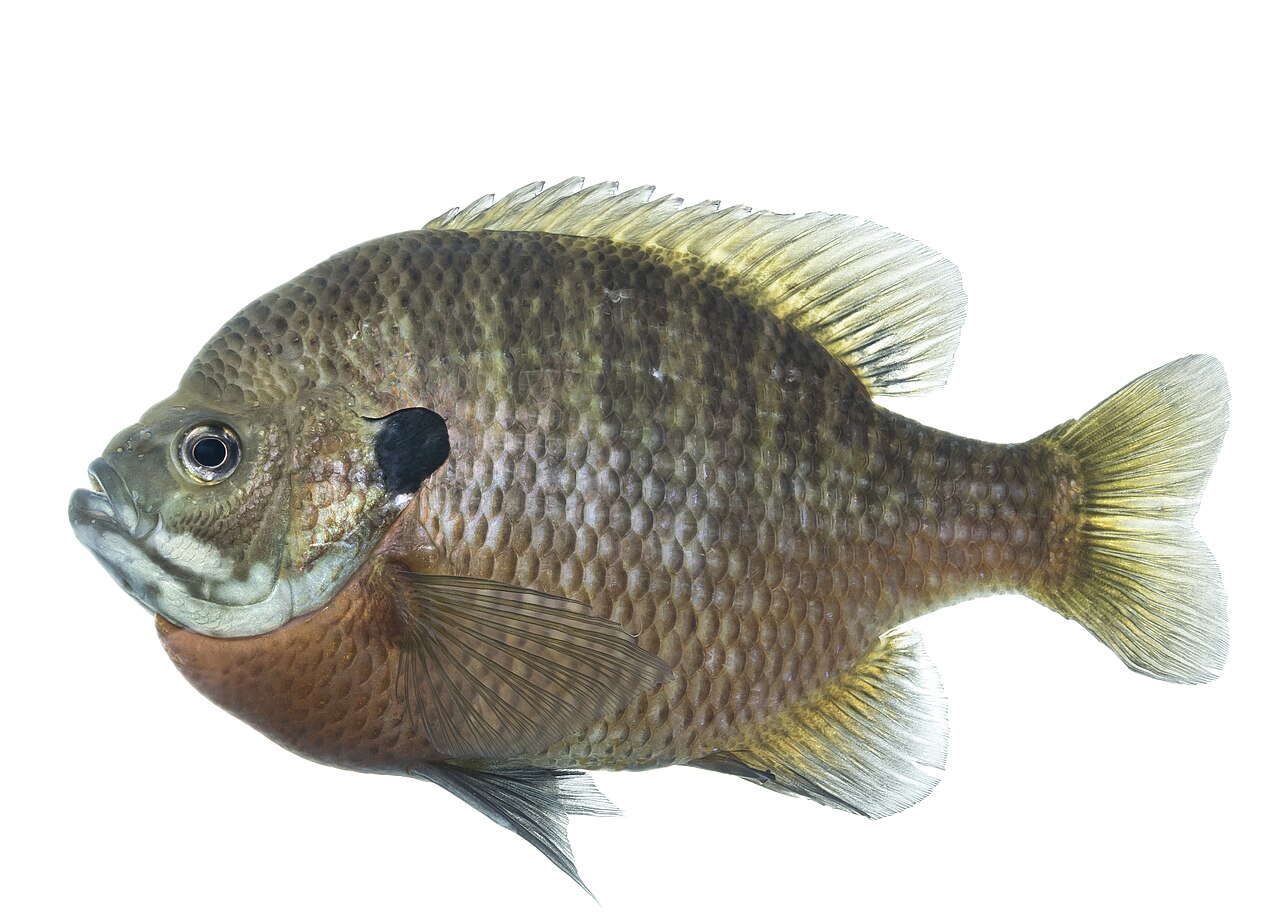
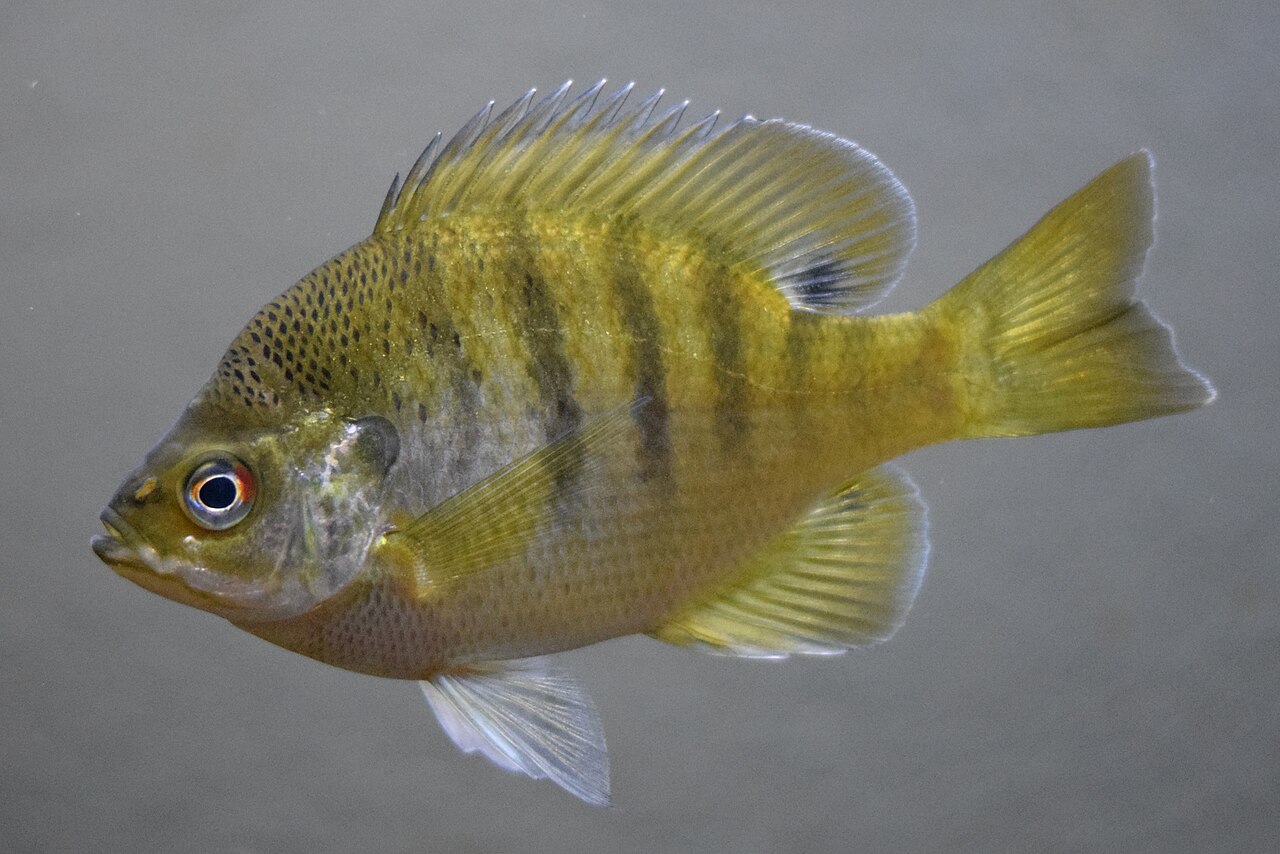
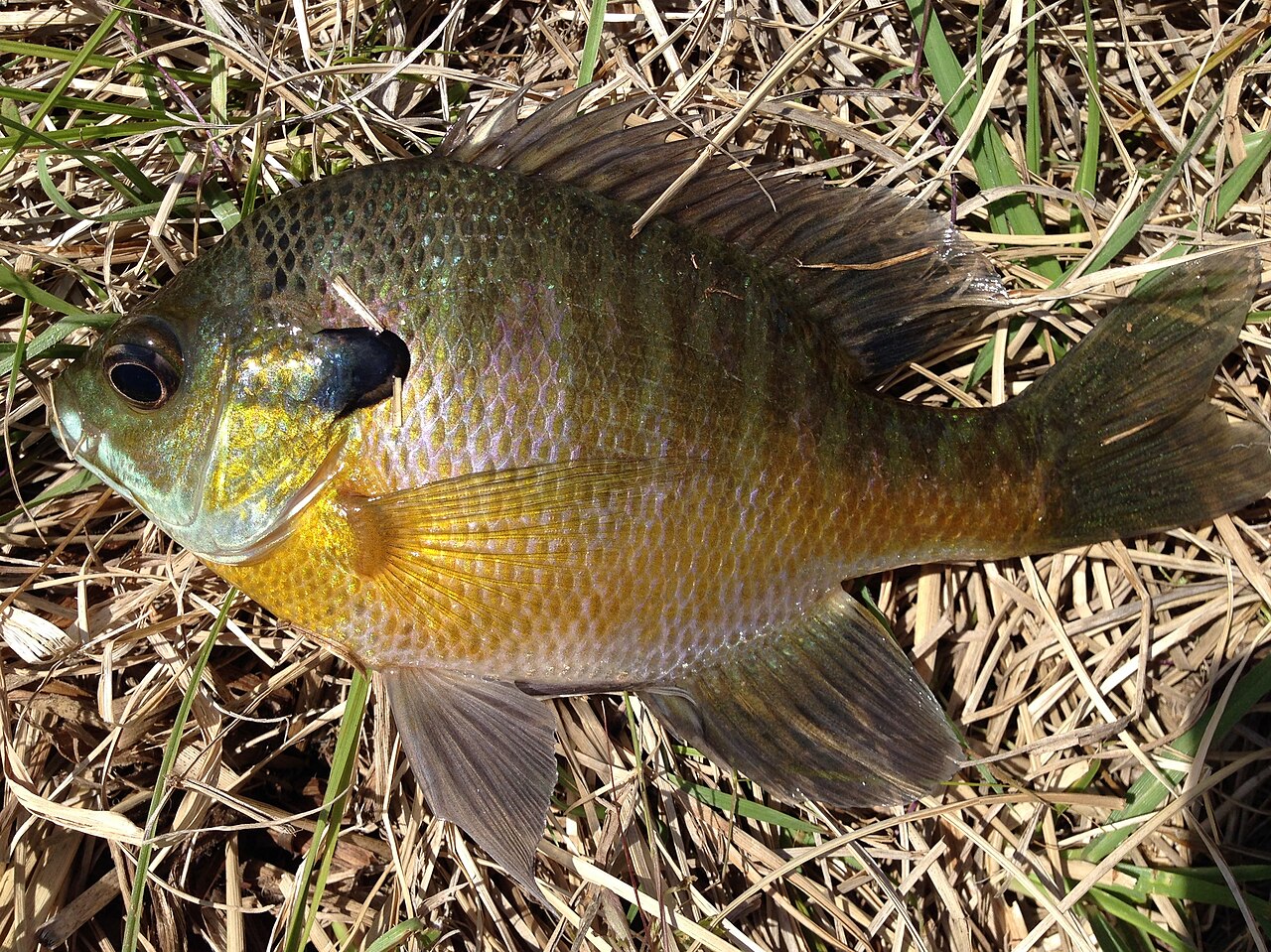
Lepomis macrochirus. Dark blue-black spot on the back edge of the gill cover, the trait that gives the species its name.
Photos
Click a photo to expand it for a closer look.
.jpg)
.jpg)
.jpg)

Identification
- Dark blue-black spot on the back edge of the gill cover, the trait that gives the species its name.
- Olive-green body with 5 to 9 vertical bars along the sides, though the bars aren't always distinct.
- Typically 4 to 8 inches, with quality populations producing fish 6 to 11 inches.
Depth by season
| Season | Depth | Note |
|---|---|---|
| Spring | – | Fish move into shallow spawning areas as water warms toward and above 70°F, the best fishing window. |
| Summer | – | Spawning activity continues into early summer in the same shallow areas. |
| Fall | – | As water cools, fish move offshore into deeper water. |
| Winter | – | Fish school by size well offshore in deep water, making them hardest to catch. |
Active times
- dawn
- day
- dusk
Top lures
- Small skirted jig (1/32-1/64 oz) (jig , black/black/chartreuse): Cast to shallow spawning beds in spring and early summer; black is a top producer.
- Small inline spinner (spinner , silver/black): Cast and retrieve around cover and spawning areas.
- Weighted wet fly or nymph (fly , black/olive): Slow retrieve or dead-drift near cover for fish keying on aquatic insects.
- Popper fly (fly , yellow/white): Topwater presentation over calm water and cover, especially in low light.
Top baits
- Worm: Only a small piece, just enough to cover a long-shank hook, fished under a light bobber near cover.
- Cricket: Hooked through the collar on a small thin-wire hook, fished under a bobber near spawning beds.
Line & tackle
- Line: 2–6 lb
- Rod power: Light to ultralight spinning rod for finesse presentations
- Hook sizes: Size 6 to 10 long-shank, thin-wire hooks for live bait
Stocked behavior
Bluegill are prolific breeders and hold their own populations once established, so agencies stock them to start a fishery, often as forage for largemouth bass, rather than replanting catchable fish the way they do with hatchery trout. Where predators are scarce they overcrowd and stunt, which is why quality-size bluegill turn up in some waters and not others.
Common mistakes
- Fishing lures or bait too fast; bluegill rarely chase prey and prefer a slow, subtle presentation.
- Using bulky terminal tackle; small, thin-wire hooks and light line produce far more bites.
- Fishing deep in summer without checking the shallows first; spawning beds can hold fish into early summer.
State records
| State | Weight | Angler | Water | Year |
|---|---|---|---|---|
| Washington | 2.33 lbs | Ron Hinote | Tampico Park Pond, Yakima County | 1984 |
| Utah | 2 lbs. 8 oz. | Scott Gubler | Quail Creek Reservoir | 2024 |
Sources: Washington's official record page , Utah's official record page , accessed 2026-09-19.
Best time to fish Bluegill
Computed from every real stocking date on record, not a general seasonal guess.
Utah
Most commonly stocked in September in Utah, based on 30 stocking events on record.
Where it's stocked
8 locations shown. Click a pin for details.
Utah
Sources
- identification (accessed 2026-09-18)
- depth_by_season (accessed 2026-09-18)
- active_times (accessed 2026-09-19)
- active_times (accessed 2026-09-19)
- top_lures (accessed 2026-09-18)
- top_lures (accessed 2026-09-19)
- top_baits (accessed 2026-09-18)
- top_baits (accessed 2026-09-19)
- line_and_tackle (accessed 2026-09-19)
- line_and_tackle (accessed 2026-09-18)
- common_mistakes (accessed 2026-09-19)
- stocked_behaviour (accessed 2026-09-19)
- stocked_behaviour (accessed 2026-09-18)
- line_and_tackle (accessed 2026-09-19)