Lake Trout
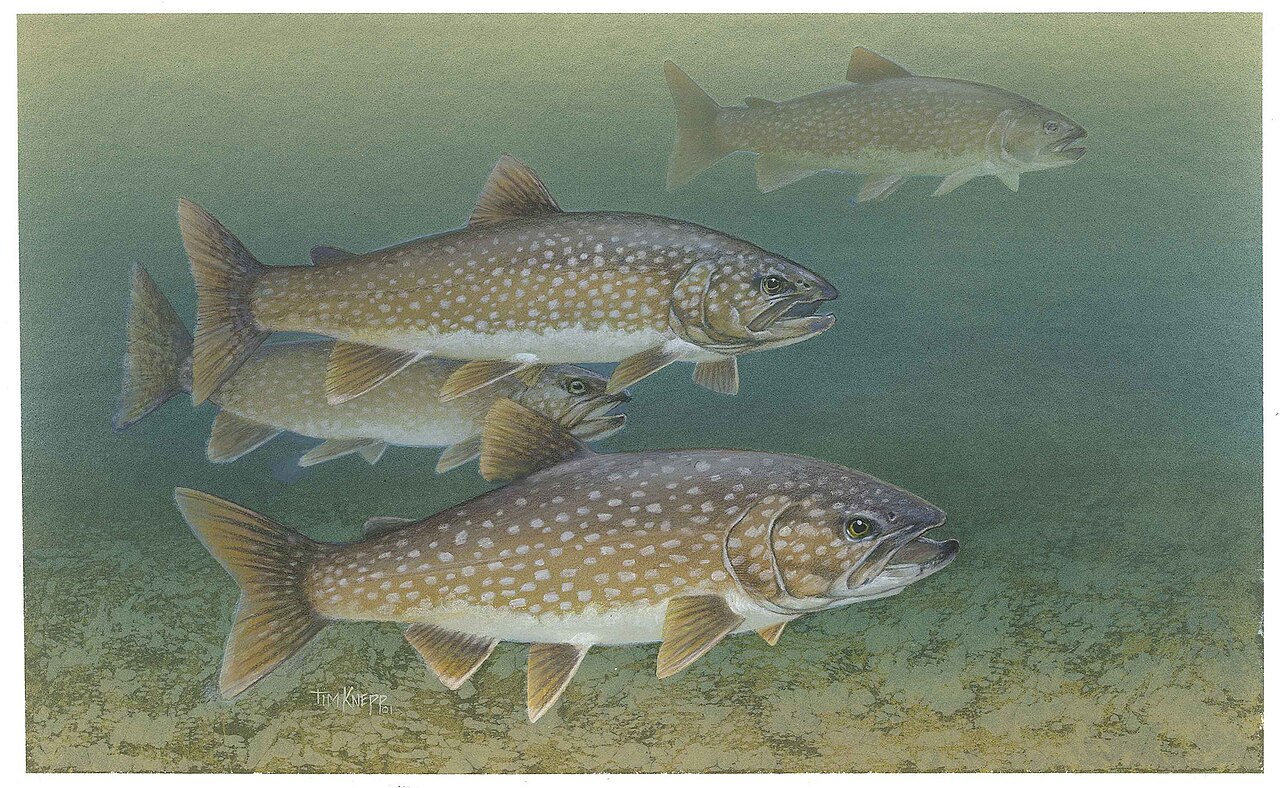
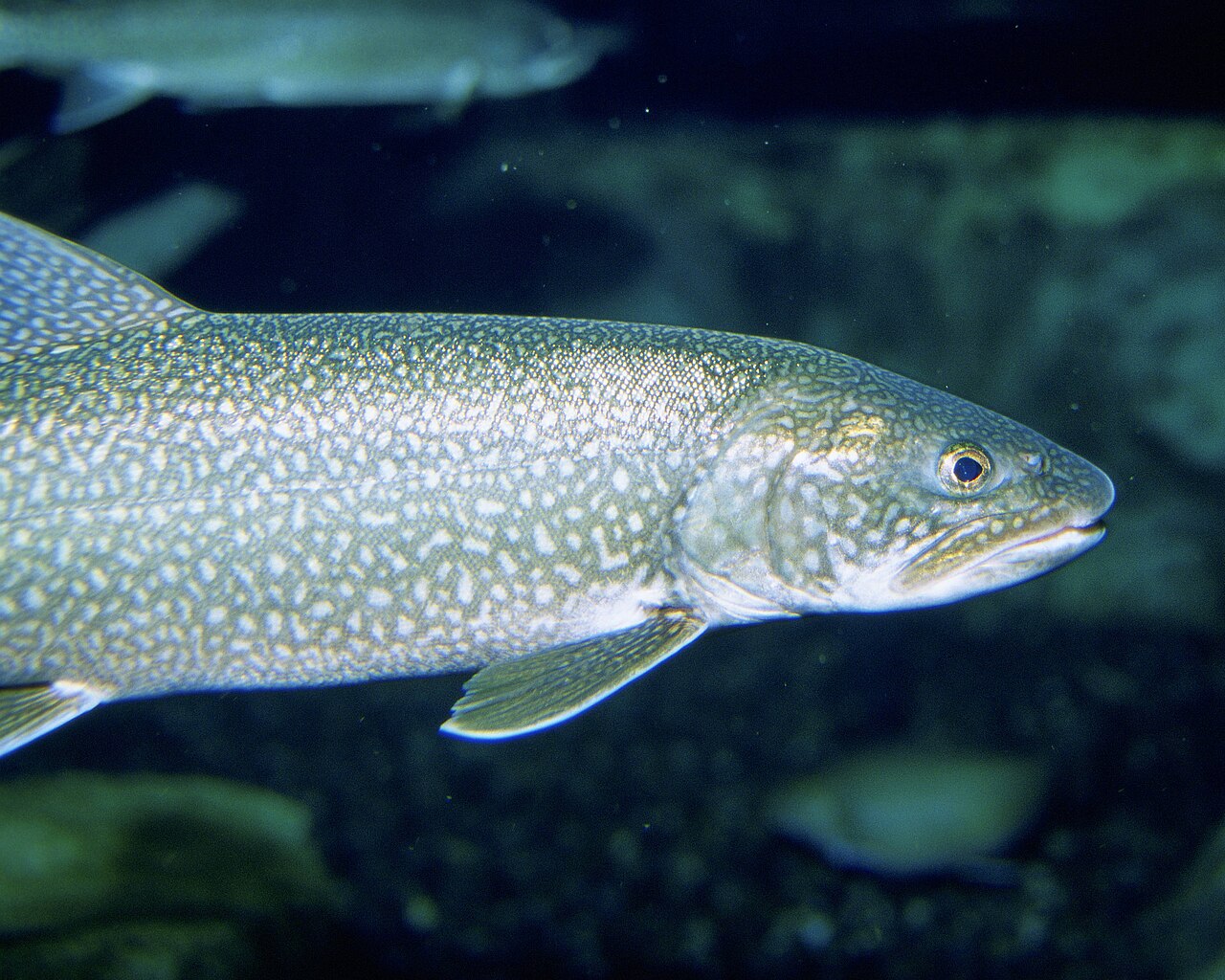
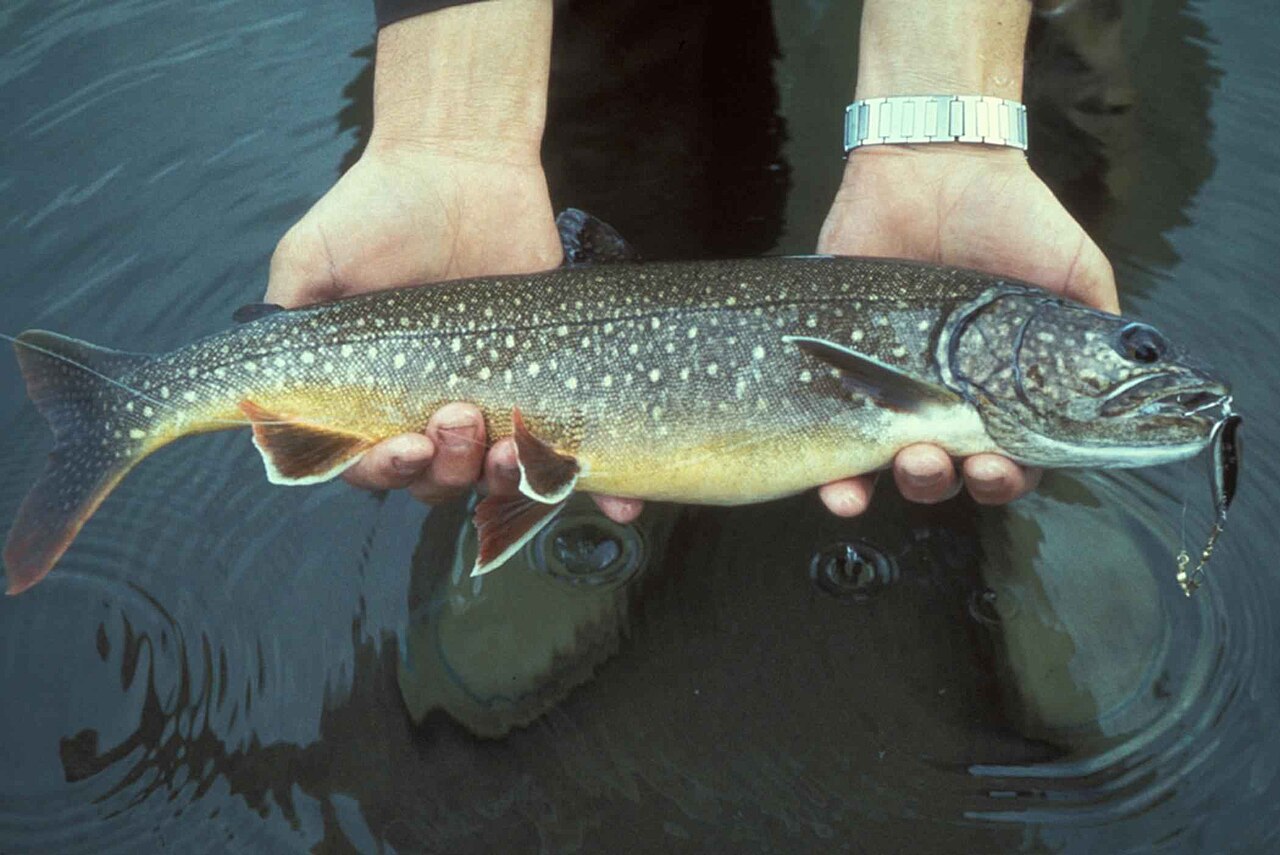
Salvelinus namaycush. Char with a gray-brown background overlaid by light spots that vary in intensity with age and habitat.
Photos
Click a photo to expand it for a closer look.



Identification
- Char with a gray-brown background overlaid by light spots that vary in intensity with age and habitat.
- Deeply forked tail and a large mouth with strong teeth on both jaws.
- In large, clear lakes fish can appear so silvery the spots are hard to see; spotting is most intense on small fish.
- One of the largest native chars, reaching 3 feet and 40 pounds or more in trophy waters.
Depth by season
| Season | Depth | Note |
|---|---|---|
| Spring | – | Often found shallower right after ice-out, before the lake stratifies for summer. |
| Summer | 50–200 ft | Fish hold in deep, cold water well below the surface as the lake stratifies. |
| Fall | – | Move shallower again as the lake cools and turns over. |
| Winter | – | On big lakes that stay ice free, cold near-shore water holds fish close to shore and high in the water column from December through May, often under 30 feet. |
Active times
- dawn
Top lures
- Heavy jigging spoon (spoon , white/chartreuse/glow): Vertically jigged near bottom over deep structure and drop-offs.
- Leadhead jig with a grub body (jig , white/silver/glow): Dropped to bottom, lifted sharply 1 to 3 feet, then let free fall; strikes often come as it sinks.
- Trolled stickbait (crankbait , silver/blue/firetiger): Trolled on a line-counter reel and run deep on a downrigger once fish drop below the warm surface.
Top baits
- Cut bait (sucker or perch): A piece of fish tipped onto a jig or spoon to add scent, worked near bottom over deep structure.
- Northern pikeminnow strip: Tipped on a leadhead jig and jigged sharply off the bottom, then allowed to free fall.
Line & tackle
- Line: 10–30 lb
- Rod power: Eight-foot medium to medium-heavy trolling rod with a line-counter reel, or a medium spinning outfit for vertical jigging
Stocked behavior
Lake trout grow slowly and can live for decades, so stocked fingerlings need several years in deep, cold water before reaching a catchable size, unlike fast-maturing rainbow trout. From release, young fish orient to deep structure rather than the surface-schooling behavior typical of freshly stocked hatchery rainbow trout.
Common mistakes
- Fishing shallow in summer; once the surface warms lake trout drop into cooler water, often below 90 feet.
- Working expansive flats; points, sloping rubble and flats next to drop-offs are what concentrate the baitfish lake trout follow.
- Waiting out a dead spot; lake trout move a lot, so change location, lure color or technique rather than sitting still.
State records
| State | Weight | Angler | Water | Year |
|---|---|---|---|---|
| Washington | 35.63 lbs | Phil Colyar | Lake Chelan, Chelan County | 2013 |
| Utah | 53 lbs. 15 oz. | Chance Scott | Flaming Gorge Reservoir | 2020 |
Sources: Washington's official record page , Utah's official record page , accessed 2026-09-19.
Best time to fish Lake Trout
Computed from every real stocking date on record, not a general seasonal guess.
Utah
Most commonly stocked in November in Utah, based on 52 stocking events on record.
Where it's stocked
5 locations shown. Click a pin for details.
Utah
Sources
- identification (accessed 2026-09-18)
- identification (accessed 2026-09-18)
- depth_by_season (accessed 2026-09-18)
- stocked_behaviour (accessed 2026-09-18)
- line_and_tackle (accessed 2026-09-19)
- line_and_tackle (accessed 2026-09-19)
- top_lures (accessed 2026-09-19)
- top_lures (accessed 2026-09-19)
- top_baits (accessed 2026-09-19)
- common_mistakes (accessed 2026-09-19)
- common_mistakes (accessed 2026-09-19)
- depth_by_season (accessed 2026-09-19)
- active_times (accessed 2026-09-19)